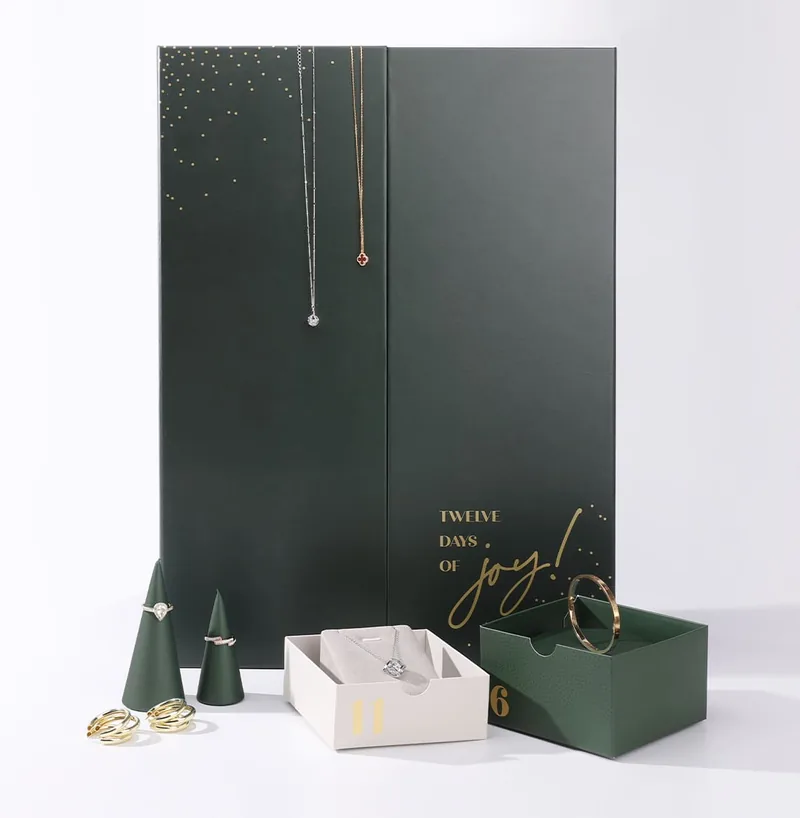
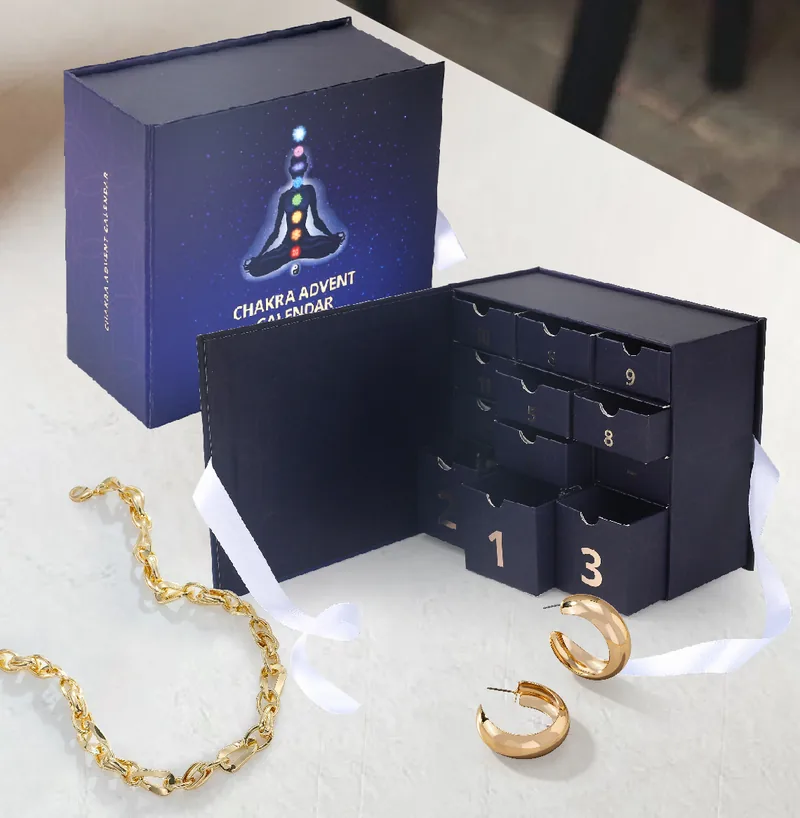
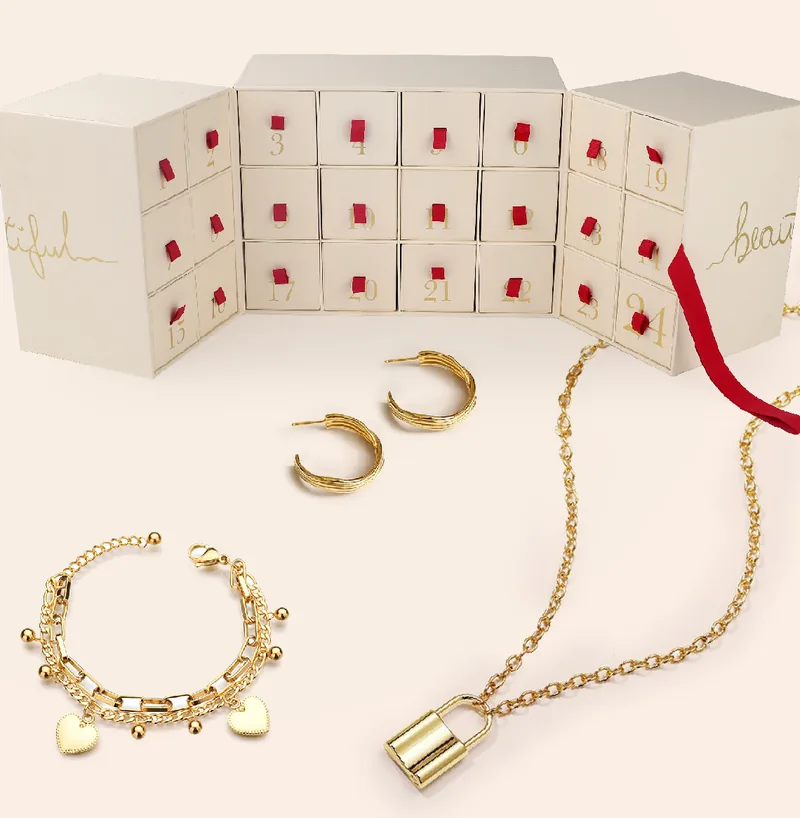
Start a jewelry calendar box with an item-by-item compartment plan: what each space will hold, its packed dimensions and the order in which it should be opened. Choose a design to review against that plan, then provide artwork, quantity and the campaign date. Compartment count and included components are confirmed for the selected project.
How do you plan the compartments in a jewelry calendar?
Create an item-to-compartment list
List each item against its intended compartment or opening number, with dimensions in the packed position and any individual wrapping. Identify repeated items and unusually shaped pieces. The required compartment count follows your assortment; do not assume that every calendar design has the same number or size of spaces.
Describe the opening and filling sequence
Show the order of discovery and where numbers or artwork should appear. Explain how the items will be loaded and accessed so the proposed openings and interior arrangement can be reviewed together. Confirm each compartment’s fit during sampling; one suitable space does not establish fit across the full assortment.
Separate the campaign date from delivery needs
Provide the campaign launch date, required arrival date and delivery destination, plus the quantity and artwork status. State whether filling will be handled separately from the packaging order. Production and delivery timing need project-specific confirmation against the selected construction, quantities and agreed responsibilities.
What to prepare for customization
Send the selected calendar-box link, item-to-compartment list, packed dimensions and opening sequence. Include numbering or artwork requirements, quantity, filling responsibilities, arrival destination and campaign date. Confirm the final compartment plan and schedule before placing the order.
PROJECT PLANNING
Procurement starting points
Standard MOQ
3,000 pcs
Sample lead time
24–48 hours
Typical production lead time
2–5 weeks
Specific product and project requirements may vary. Product-specific requirements take precedence over these standard starting points. Final timing is confirmed during quoting against specifications, quantity, processes and production scheduling.
This website uses cookies to provide you with a safer and more personal experience. By accepting, you agree to the Cookie Policy and the use of cookies for advertising and analytics purposes.